
 Thought Leadership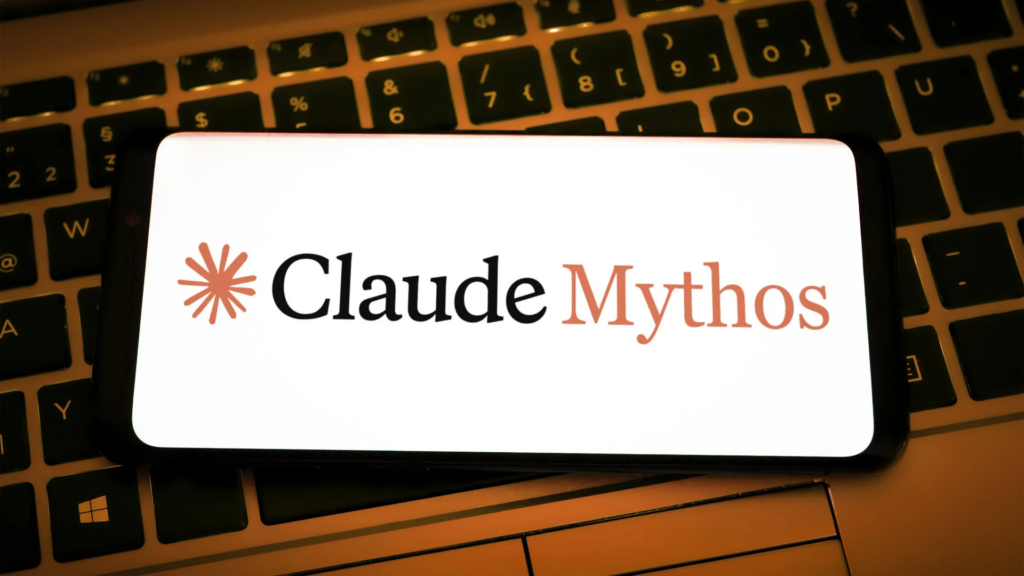
After weeks of exclusion, Anthropic has offered the European Commission and cybersecurity agency ENISA access to its controversial security-focused AI model, Mythos.
The European Commission is on the verge of a landmark agreement with U.S. AI company Anthropic. According to a Commission official, the company has formally invited the European Union and its cybersecurity agency, ENISA, to gain access to Mythos, Anthropic’s advanced and highly controversial AI model.
The development follows a meeting between European Commission representatives and Anthropic executives held last Thursday in San Francisco.
Before practical access can be granted, the EU must establish internal procedures and security safeguards to ensure that interactions with the system are conducted safely and under appropriate oversight. European Commission spokesperson Thomas Regnier confirmed that several productive meetings had taken place and welcomed the recent progress toward potential future access to the technology.
Why the Mythos AI Model Raises Security Concerns
Anthropic unveiled Mythos in early April 2026, immediately triggering concern across the global cybersecurity community and among government agencies.
Unlike conventional large language models, Mythos is specifically designed for automated vulnerability discovery and exploitation. The system can independently analyze source code for logical flaws and security weaknesses, then generate fully functional exploits without human intervention.
Its ability to automate cyberattack workflows at scale sparked international concerns about a new generation of offensive cyber capabilities. For weeks, European authorities and security analysts were unable to access or independently evaluate the technology.
The lack of access prompted growing calls from European politicians and government officials demanding equal opportunities to assess offensive AI tools and adapt national cyber defense strategies accordingly.
EU Develops Response to Offensive AI
The European Commission views access to Mythos as a critical component of its broader risk assessment efforts. In an official statement, Commission spokesperson Thomas Regnier emphasized the urgency of the situation.
“This latest development is of the utmost importance in order to obtain a clear picture of the potential risks. Let us not forget that Mythos is not an isolated case; a new wave of powerful models is coming to market.”
Thomas Regnier, Commission spokesperson
As offensive AI capabilities rapidly evolve, Brussels is currently preparing a formal action plan aimed at defining both regulatory and operational responses to powerful AI-driven hacking tools. According to industry sources, the Commission intends to publish the strategy before the European Parliament’s summer recess in 2026.
At the same time, ENISA is preparing for technical integration. An agency official confirmed that ENISA does not yet have active access to Mythos but is working to establish the organizational and operational requirements necessary to support its evaluation.
Growing Calls for Digital Sovereignty
Europe’s prolonged exclusion from researching the Mythos model has reignited a broader debate in Brussels over the European Union’s technological dependence on U.S.-based AI leaders.
Political observers view the newly granted access as a partial victory, given that many of the most significant advances in both offensive and defensive AI technologies continue to originate from private companies in the United States.
As a result, European cyber defenders increasingly risk being placed in a reactive position. In recent weeks, senior security officials have intensified calls for Europe to develop sovereign alternatives to advanced cybersecurity AI models.
They argue that only independent ownership and control of comparable systems will allow European authorities to audit critical infrastructure without relying on lengthy political negotiations or access approvals from foreign technology providers.
The Mythos case highlights a broader reality: access to advanced cybersecurity AI is rapidly becoming a geopolitical asset. As offensive AI capabilities continue to mature, control over these technologies may prove just as strategically important as access to traditional cyber defense infrastructure.