

 Thought Leadership
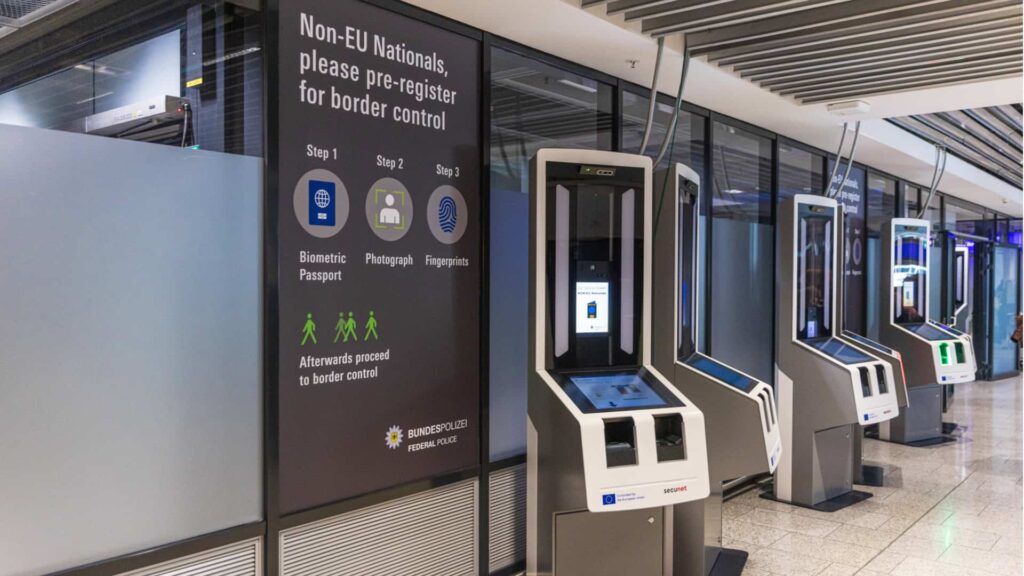
The EU’s new Entry/Exit System (EES) was delivered years behind schedule. Now, the EU agency responsible for the system is taking the IT companies involved in its development to court.
Non-EU citizens entering the Schengen Area are registered through the Entry/Exit System (EES). The companies behind its development are now facing legal action over their failure to deliver the system on time. According to a report by the Financial Times (FT), the EU agency eu-LISA has filed a lawsuit against IBM, French IT services provider Atos, and Italian defense contractor Leonardo. The FT cites internal communications as the basis for its report. Reuters subsequently picked up the story but said it had not independently verified the information at the time.
One Consortium, One Contract, Multiple Missed Deadlines
eu-LISA is responsible for operating major IT systems across the EU. In 2019, the agency awarded the main EES contract to a consortium comprising the Belgian subsidiaries of IBM and Atos, along with Leonardo. The six-year contract covered the development and maintenance of the central system. Problems had already emerged by 2021. Due to delays, eu-LISA imposed a financial penalty, which IBM Belgium and Atos Belgium refused to accept. In a letter dated October 2021 and seen by the FT, the companies disputed whether the penalty was justified in the first place. They also challenged the way its amount had been calculated.
The companies attributed the delays to external factors, including the COVID-19 pandemic. They also rejected the revised deadlines set by eu-LISA in February 2022. All three companies formally objected to the new schedule. In comments to the FT, eu-LISA stressed that the lawsuit would have no impact on the system’s operation. The dispute concerns exclusively the late delivery during the development phase, not the system’s ongoing operation.
What the EES Is Designed to Do
The system electronically records when non-EU citizens cross the European Union’s external borders, both when entering and leaving. It applies across all 29 Schengen Area countries. The EES is designed to help authorities identify people who overstay their permitted period, make identity fraud more difficult, and curb irregular migration.
(Editorial Team)