Thought Leadership
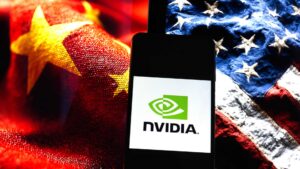
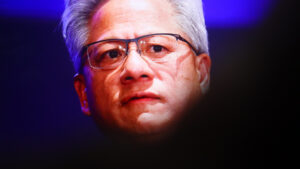
Scandals, geopolitical tensions and the future of AI technology, which its proponents say will change the world: the drama surrounding the downfall of longtime Nvidia CEO Jensen Huang is unfolding on multiple fronts.
Why did Jensen Huang step down as Nvidia CEO?
Officially, it was a resignation. Neither Nvidia nor Huang commented on the reasons for his departure after more than 30 years at the helm. But the timing speaks for itself. Following initial reports about close ties between the Nvidia chief and Alice Huang, an executive at Nvidia customer Megaspeed whom U.S. security officials suspected of potentially spying for China, Nvidia initially dismissed the allegations. It was simply a normal customer relationship, the company said.
Only after the Financial Times reported an extramarital affair did Nvidia launch an investigation to determine whether company secrets or national security had been compromised. According to financial news outlet Bloomberg, Nvidia General Counsel Tim Teter confronted his boss at home with the FT report, “and Huang admitted it.” Reports of a second affair followed, this time involving a senior Nvidia executive who reported directly to Huang.
Things then moved quickly. The board met, and Huang’s resignation was announced on Thursday. U.S. companies have traditionally shown little tolerance for relationships between executives and employees. Similar affairs have already cost top executives at Intel and McDonald’s their jobs.
Was the Megaspeed executive a spy or not?
U.S. President Donald Trump says he does not know for certain, but that the matter will be investigated. According to media reports, U.S. intelligence agencies themselves disagree over how conclusive the evidence is that Chinese intelligence recruited the woman. She reportedly came onto the agencies’ radar after communications with Beijing were intercepted.
Whatever the truth, Huang’s affairs could ultimately turn out to be the lesser of his problems.
Why is that?
At the time Huang and the Megaspeed executive were seen together in public, authorities in the United States and Singapore were already investigating her company. They were looking into suspicions that Nvidia technology had been routed to China through Megaspeed. In the summer of 2025, Singaporean authorities temporarily seized the executive’s passport, while Megaspeed was visited by U.S. inspectors. Megaspeed now says Alice Huang left the company in August 2025, insists that it is a law-abiding business and says it is investigating the allegations.
Nvidia has not supplied Megaspeed with chips since the summer of 2025. Before that, the U.S. Department of Commerce had requested documentation relating to chip sales to the company. Within the U.S. administration, Treasury Secretary Scott Bessent is now focusing on who at Nvidia knew what, and when. “I don’t care whether she was a spy or not,” he said in a television interview. “Jensen’s weaknesses are his weaknesses.”
The real question, he said, was: “Did they facilitate these seemingly prohibited sales to drive up revenue and profits?” He also wants to know whether Nvidia’s senior management was aware of the transactions, since the use of shell companies to route chips to China was apparently obvious. Bessent said on Sunday that he considered a response within ten days reasonable.
How realistic is Huang’s return as CEO?
Over the weekend, tech billionaire Elon Musk, a major Nvidia customer through his space and AI company SpaceX, joined calls for Huang to return to the top job at Nvidia. The argument is that Huang turned Nvidia into a driving force behind the AI revolution and is irreplaceable. The Financial Times reported that Huang’s allies were trying to put pressure on Nvidia’s board. Huang himself was reportedly not opposed to returning. Trump, who has frequently been receptive to Huang in recent months, said he “wouldn’t mind” seeing him back in the CEO seat.
However, subsequent media reports suggested that Nvidia’s board was not considering such a move. At least for now, that appears to put the matter to rest.
What could Huang’s departure mean for the AI industry?
There is no denying that Huang was a visionary executive who also played a major role in fueling the AI boom with his showmanship. While Nvidia’s technological progress is expected to continue thanks to its tens of thousands of specialists, industry experts warn that the company could lose some of the leadership capabilities Huang brought to the table. There is also the question of the multibillion-dollar financial cycle within the AI industry that took shape during Huang’s tenure.
After Nvidia chips became the leading technology for training artificial intelligence models, the company’s business grew explosively. For fiscal year 2022, Nvidia reported revenue of just $27 billion. This year, that figure is expected to reach USD $400 billion. Nvidia invested some of the billions in profits generated by this growth in other AI companies. Those companies, in turn, were able to spend more money on Nvidia chips. As a result, Nvidia was sometimes described as the central bank of the AI industry. According to media reports, Huang himself had already wanted to scale back these financial flows. If they dry up entirely under new leadership, many AI companies could feel the impact.
(dpa/Translation: Editorial Team)