
 Thought Leadership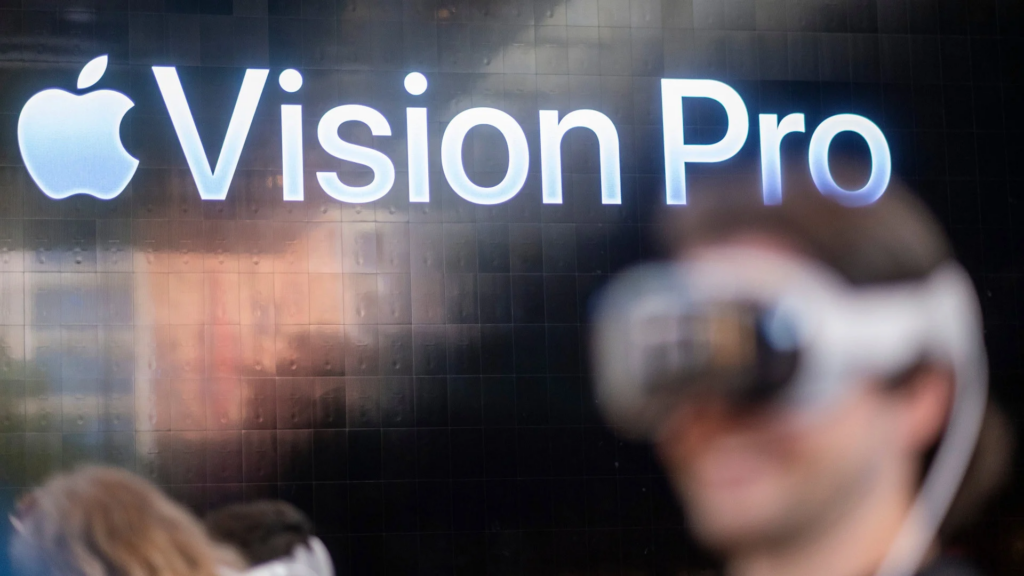
When Apple unveiled its Vision Pro headset more than three years ago, the company presented it as a revolution in everyday life.
Yet with a price tag now approaching €4,000, the headset has remained a niche product among consumers. Apple does not disclose precise sales figures, but one thing is clear: Few consumers have so far been willing to buy the bulky headset to experience spatial computing in their living rooms or, for example, be startled by virtual 3D dinosaurs.
Dismissed as Entertainment, Embraced by Hospitals
While Apple has had to scale back its ambitions in the consumer market, the device is making remarkable progress elsewhere: in operating rooms around the world. Healthcare is emerging as the market where the headset’s full potential can be realized.
How closely cutting-edge research in Germany is following this development is illustrated by an episode from Saxony. In October 2023, Leipzig-based engineer Ronny Grunert of the Fraunhofer Institute for Machine Tools and Forming Technology (IWU) sent an email directly to Apple CEO Tim Cook. Together with Professor Dirk Winkler of Leipzig University Hospital, he had developed surgical navigation software that he wanted to present to Apple. The software projects high-resolution MRI and CT data as a three-dimensional map directly into the surgeon’s field of view in the operating room.
Tim Cook Responds to Email From Leipzig
Two weeks later, a response arrived from Cupertino, eventually leading to an invitation to Apple’s US headquarters. There, the Leipzig researchers were able to integrate their software with the Vision Pro, participate in workshops with Apple engineers and, ultimately, take home a device that was not yet commercially available in Germany at the time for further research.
Just how far the technology has progressed was demonstrated recently at the First European Spatial Computing Healthcare Summit in Leipzig. Organized by the Fraunhofer IWU and Leipzig University Hospital, the conference brought together surgeons, developers and engineers to discuss the future of spatial computing in medicine.
One aspect was particularly striking: the technological consensus. At a conference where one might expect to see a range of hardware from different manufacturers, every surgical application presented by the pioneers in the field ran on Apple Vision Pro.
Headset Brings Live Images From Inside the Body Into View
In the operating room, the headset addresses a fundamental logistical and ergonomic problem. Until now, doctors performing minimally invasive procedures have had to repeatedly turn their heads away from their hands to look at external wall-mounted monitors. With Vision Pro, the high-resolution live feed from an endoscope or a three-dimensional representation of the patient’s anatomy can appear directly within the surgeon’s natural field of view.
Professor David S. Baskin of Methodist Hospital in Houston, Texas, is a renowned specialist in procedures performed entirely through the nose. Instead of making external incisions in the skin of the face or head, surgeons insert tiny instruments and a small camera through the nostrils. This allows them to reach deep structures in the head without visible scars, including the sinuses and even the brain directly behind the nose.
Baskin has performed more than 5,000 endonasal procedures. Speaking in Leipzig, he said the headset had become indispensable to him after just two operations. Compared with working with wall-mounted monitors, Vision Pro allows surgeons to maintain a more comfortable posture. He also values the ability to control the system entirely through eye tracking and hand gestures, eliminating the need to touch any surfaces.
California Study Confirms Findings From Leipzig
The claim made at the Leipzig conference that Vision Pro represents a genuine advance in the operating room is now also supported by research from the United States. Researchers at the University of California, San Diego, examined 32 endoscopic procedures to treat blocked tear ducts.
Surgeons using Vision Pro completed the procedures in an average of 34.4 minutes, compared with 42.7 minutes for procedures performed using conventional monitors. The nearly 19 percent reduction in procedure time came without any complications. At the same time, the surgeons reported noticeably lower levels of physical and mental strain.
As impressive as these advances in surgery may be, the operating room niche does not replace the billion-dollar mass market Apple had hoped to create. Even if thousands of hospitals worldwide eventually equip their operating rooms with headsets, the business remains small compared with the hundreds of millions of iPhones or Apple Watches sold.
Vision Pro may set new standards as a specialized tool for medical professionals. But Apple’s dream of delivering the next true “One More Thing” for the global consumer market remains unfulfilled.
(dpa/Translation: Editorial Team)