
 Thought Leadership
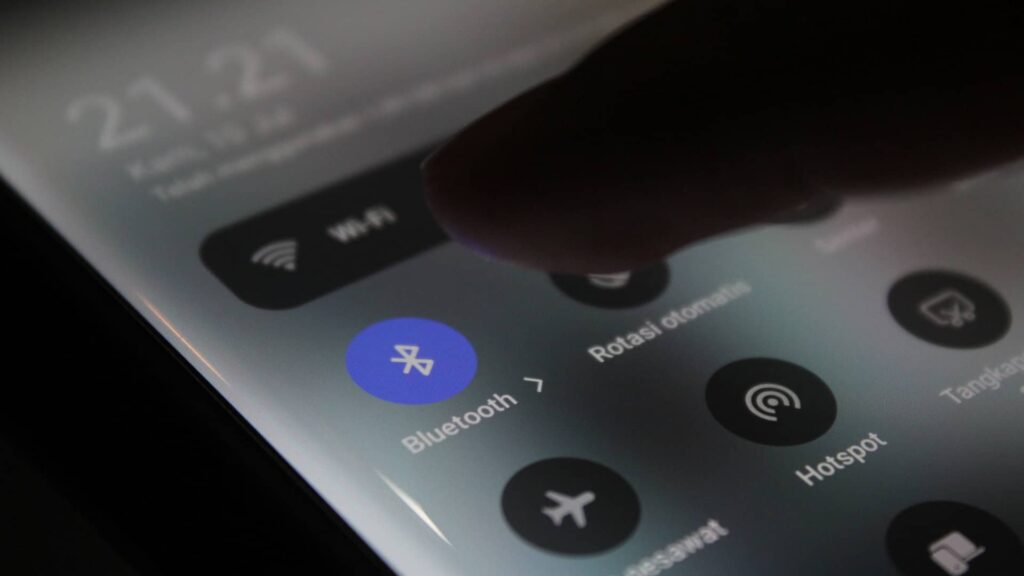
Bluetooth LE is set to become significantly faster. The Bluetooth SIG has approved High Data Throughput as part of Core 7.0, increasing data rates to 7.5 Mbps. The first devices are expected to arrive in 2027.
The Bluetooth Special Interest Group (SIG), which oversees the Bluetooth wireless standard, has approved Bluetooth High Data Throughput (HDT). The technology is an optional feature of the new Bluetooth Core 7.0 specification. HDT raises the maximum data rate of Bluetooth Low Energy (LE) to 7.5 Mbps. Previously, the limit was 2 Mbps using the LE 2M PHY transmission mode. This represents nearly a fourfold increase in speed. As with any wireless standard, however, actual throughput in everyday use is likely to be lower.
A New Radio Layer
HDT introduces a new physical layer (PHY) featuring more robust modulation schemes. This allows Bluetooth LE devices to transfer significantly more data over the same connection. In addition to higher data rates, the SIG highlights improved radio spectrum efficiency, greater energy efficiency, and more reliable connections. Because data can be transmitted faster, the radio module needs to remain active for less time, potentially reducing power consumption.
Lossless Audio as the First Use Case
The SIG sees high-quality wireless audio as the first major application for HDT. This includes lossless and high-resolution playback, multichannel surround sound, and spatial audio. Until now, Bluetooth audio has relied heavily on compression. There has been no universal standard for lossless Bluetooth audio, leaving manufacturers to develop their own proprietary solutions. According to the SIG, other potential applications include faster synchronization of smartwatches and fitness data, shorter firmware updates, and AI-powered wearables and spatial computing devices.
New Chips Required
Existing devices will not gain HDT support through a software update. The new radio layer requires updated hardware in the Bluetooth chip, both in the smartphone or computer and in connected devices such as headphones, smartwatches, and other peripherals. The SIG expects the first products to arrive in 2027. How quickly HDT gains traction will depend on how many manufacturers integrate the optional feature into their chips and devices. The SIG is also working toward expanding Bluetooth LE into the 5 GHz and 6 GHz frequency bands over the longer term. Until now, Bluetooth has operated in the 2.4 GHz band.
(Editorial Team)