

 Thought Leadership
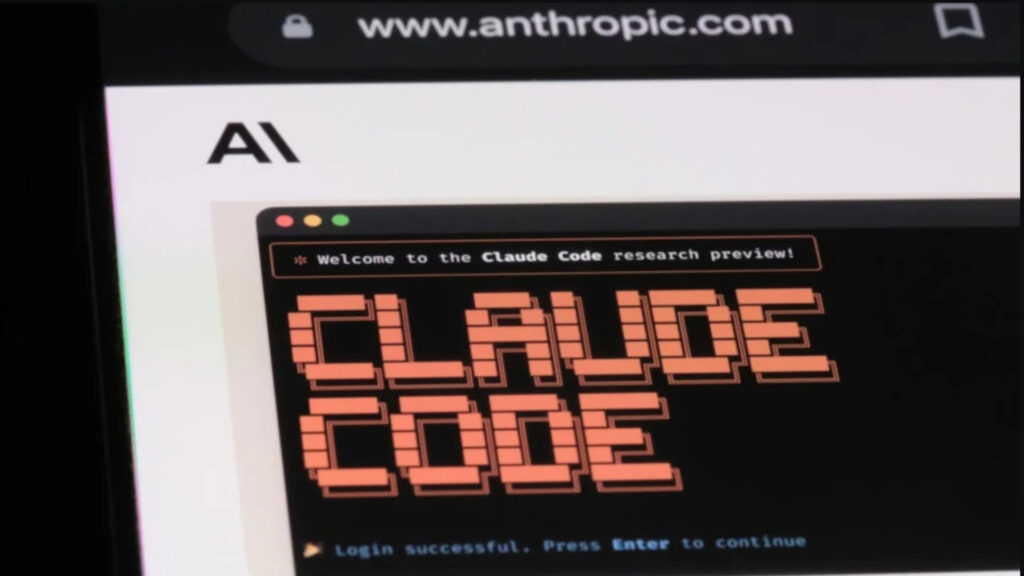
Addy Osmani describes how developers can unlearn critical thinking due to AI agents. He recommends fixed habits for verification.
Addy Osmani, a developer on the Claude Code team at Anthropic, warns that working with AI agents can weaken developers’ critical thinking. In an essay published on X, he writes that in his own daily work, hardly anything forces him to think critically anymore since so much of his work runs through agents. Critical thinking must therefore be consciously built into the day.
From Offloading to Surrender
Osmani distinguishes three stages in dealing with AI. In the first, cognitive offloading, developers hand over tasks to the AI, but retain responsibility for the result. He does this himself all day long, writes Osmani. In an intermediate stage, one’s own judgment increasingly takes a back seat, and AI responses become the basis for the next task. At the end lies cognitive surrender, in which users adopt results without questioning them. The term was coined by researchers Steven Shaw and Gideon Nave of the Wharton School.
“If you cannot explain the answer to a question, not even with the help of your agent, you have given up responsibility.”
Addy Osmani, developer on the Claude Code team
Green Tests Are Not Enough
As an example, Osmani cites an agent that submits a pull request with 600 lines of cleanly structured code whose tests have passed, and which the developer then merges. However, passed tests only prove that the conditions covered by the tests are met. He refers to the growing gap between the volume of code and developers’ understanding as cognitive debt. Moreover, agents can generate software faster than teams can review it. More agents then primarily increase the amount of work waiting to be reviewed. Skills that one no longer practices are lost faster than one thinks.
Habits for Verification
Osmani does not speak out against AI tools, but recommends fixed habits. Before a task, developers should define how they measure success, form their own opinion first, check the commands and test logs executed by the agent, and favor smaller changes. Additionally, one can have the agent ask questions about the code just written before it is adopted.
At the beginning of 2026, Anthropic published a study according to which developers who used AI support when learning a new programming library scored 17 percent worse in subsequent comprehension tests. According to Anthropic’s IPO prospectus, more than 90 percent of the company’s newly added code in September came from Claude.
(Editorial Team)