
 Thought Leadership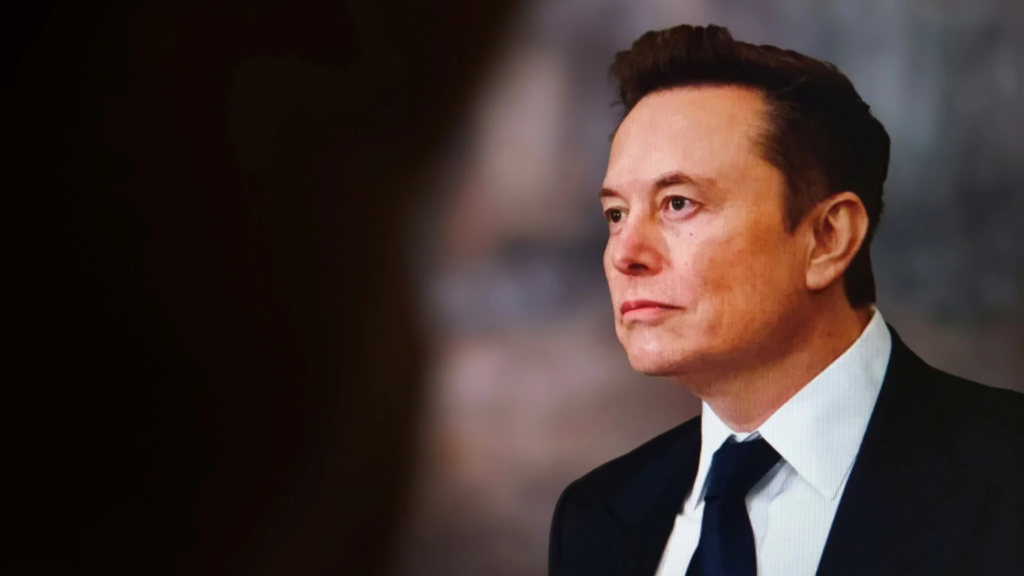
From this premise, Musk derives his vision of a society defined by abundance. At the beginning of this part of the conversation, he spoke of an approaching “age of incredible abundance” in which “everyone can have anything they want.”
Work, in the traditional sense, would become unnecessary. People could still choose to work, but for the enjoyment of it rather than out of economic necessity. Musk compared this to hobby gardeners who grow their own tomatoes despite being able to buy cheaper ones at the supermarket.
To fund a corresponding universal basic income, Elon Musk suggested that the government could simply issue checks to citizens. When asked whether this would cause inflation without a corresponding source of funding, he argued that the enormous increase in productivity could instead lead to deflation. He did not, however, provide a detailed economic explanation for how such a system would work.

Musk Reflects on His Own Role in Accelerating AI Development
Musk was notably candid when asked about his own responsibility for the pace of AI development. He explained that he originally helped found OpenAI as a counterweight to Google’s near-monopoly position in AI at the time. OpenAI later gave rise to Anthropic, which has since become one of the leading AI companies.
In hindsight, however, Musk acknowledged that these decisions ultimately contributed to accelerating AI development even further, although that was not his original intention. His conclusion: All roads ultimately lead to faster AI development, meaning people can either be unhappy about it or join the evolution.
Musk Calls for Industry Self-Regulation
Asked whether regulation could be used to slow the pace of AI development, Musk referred to a conversation with Google DeepMind CEO Demis Hassabis. Rather than relying on government agencies as the first line of oversight, Musk proposed regular discussions among the leading AI companies. His recommendation was for the companies to meet every few weeks, or at least speak by phone, to jointly discuss safety and risk issues.
According to Musk, competitors have a vested interest in monitoring one another because government officials without deep technical expertise would have difficulty determining whether a new model should be released. Government intervention, he argued, should only come into play when a company knowingly ignores identified risks.
When asked why such an exchange has not already been established given the rapid pace of progress, Musk said it needs to happen as soon as possible. Six months is already a long time in the current development cycle, he argued, as there are now, in some cases, several AI breakthroughs every day.
Strong Criticism of Sam Altman, Praise for Anthropic
Asked about his difficult relationship with OpenAI CEO Sam Altman, Musk was highly critical. He accused Altman of turning an organization originally founded as a nonprofit and open-source project into a closed, profit-driven company valued at around $800 billion. In Musk’s view, this contradicts the organization’s original founding purpose.
By contrast, Musk described Anthropic CEO Dario Amodei as principled and committed to the greater good. He added that Anthropic employees have consistently struck him as trustworthy.
(lb)