Thought Leadership

As memory chips are increasingly allocated to AI data centers, smartphone prices are rising. Shipments of devices priced below $100 USD fell by nearly 60 percent.
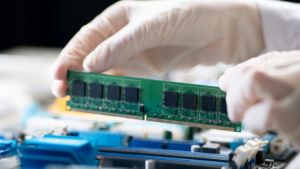
A global shortage of memory chips is pushing up smartphone prices and driving the cheapest models out of the market. That is according to Rest of World, citing several market research firms. Counterpoint Research reports that prices for existing smartphone models have risen by around 15 percent worldwide this year, while newly launched models cost about 25 percent more than they did a year ago.
Sharpest Price Increase in India
Price increases vary significantly by region. Prices have risen by 21 percent in India, 19 percent across the Asia-Pacific region, and 18 percent in the Middle East and Africa. In the US, the increase stands at 5 percent. Xiaomi raised the price of its 128 GB Redmi 15C in India from 12,499 rupees, roughly $140 USD, when it launched in December to 16,999 rupees, around $190 USD, in June. That represents a 36 percent increase.
According to IDC, global shipments of smartphones priced below $100 USD fell by nearly 60 percent year over year in the second quarter of 2026. In 2025, 173 million devices in this price range were shipped. In Southeast Asia, shipments of Oppo smartphones priced below $100 USD plunged 96 percent, according to Omdia. Vivo raised the price of its key entry-level model above the $100 USD threshold in most markets. In Africa, shipments of smartphones priced below $100 USD declined by 34 percent.
Manufacturers Shift to Higher-Priced Models
Chinese manufacturers, which account for around 60 percent of smartphones shipped worldwide, have significantly scaled back their entry-level projects and are focusing on higher-margin devices, according to Counterpoint analyst Ivan Lam. Devices that previously sold for less than $150 USD could increasingly be priced below $250 USD or even $300 USD. Lam does not expect prices to return to their pre-2025 levels.
Memory Chip Makers Supply AI Data Centers
Samsung Electronics, SK hynix and Micron together control more than 90 percent of the memory chip market.
“There are three primary manufacturers of memory, and in late 2025, all of them pivoted the vast majority of their supply towards AI data centers instead of consumer electronics,” Llamas said. “That left many companies scrambling for inventory. … Scarcity of memory has driven up prices for memory, and those price increases have been passed on to the consumer.”
S&P Global estimates that capital spending by major US cloud providers will rise to more than $1.3 trillion USD in 2027, up from $470 billion USD in 2025.
Impact on Internet Access
The mobile industry association GSMA had forecast that nearly 800 million more people would gain access to mobile internet by 2030. Rising device prices could put that forecast at risk, according to Claire Sibthorpe, Head of Digital Inclusion at the GSMA Foundation. For the poorest 20 percent of the population, an entry-level device costs the equivalent of 44 percent of their monthly income, according to the GSMA. In sub-Saharan Africa, that figure rises to 76 percent.
(Editorial Team)