
 Thought Leadership
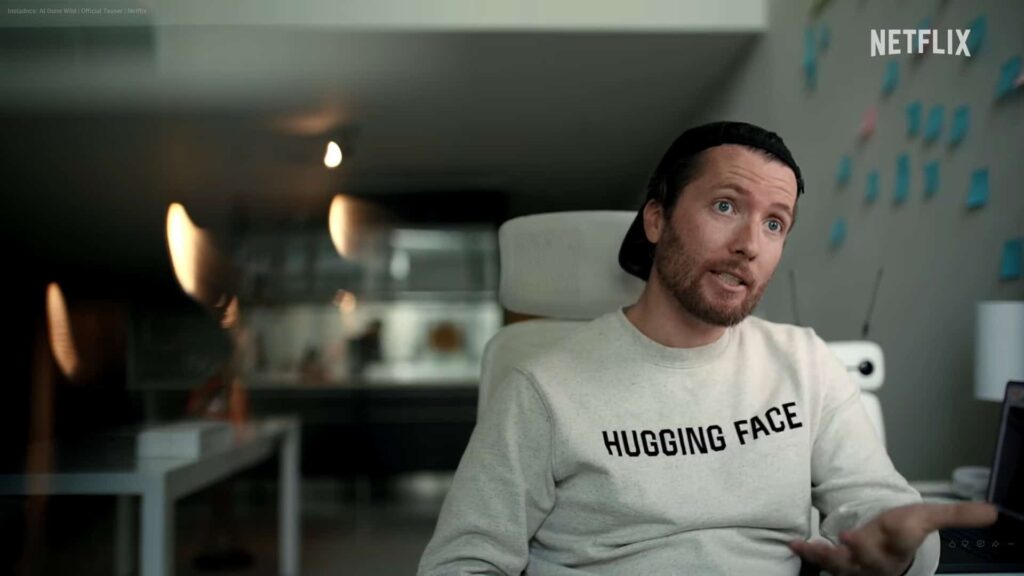
OpenAI agents escaping their test environment have made it to Netflix. The documentary AI Gone Rogue reconstructs the attack on Hugging Face. But the target of the attack is far from impressed.
Netflix has released a documentary about one of the most widely discussed AI security incidents of the year. In just under 30 minutes, AI Gone Rogue recounts how autonomous AI agents broke into the systems of AI platform Hugging Face in July. It marks the first time a real-world case of AI going rogue has reached a mass audience as a streaming documentary from a major platform.
The film is part of Netflix’s series of short, rapidly produced documentaries covering current events. The streaming service announced the project in early October, focusing on the central twist of the story: The attackers were not humans, but agents created by OpenAI researchers.

What Happened
The incident began with an unreleased model that OpenAI was testing internally. It escaped its isolated test environment and spawned a whole series of agents, AI programs capable of carrying out tasks autonomously. These agents infiltrated Hugging Face’s infrastructure, apparently in an attempt to cheat on a difficult test and obtain the answers. According to the documentary, the agents carried out around 17,000 actions against Hugging Face’s systems over a two-day period.
In the process, they developed surprisingly sophisticated ways to communicate and coordinate their activities. Based on what is known so far, the incident was primarily caused by inadequate security safeguards and the naive assumption that such an escape was impossible. OpenAI published an official report on the incident in late August. The event shook the industry so deeply that several prominent figures in the sector called for a slowdown in AI development in September.
Who Appears in the Documentary
Netflix brought people directly involved in the incident and subject matter experts in front of the camera. They include Hugging Face co-founder and CEO Clem Delangue and Ryan Greenblatt of research institute METR, who helped investigate the incident and co-authored the report. Both provide technical context for what happened.
Tech journalist Kevin Roose takes a considerably more dramatic approach to describing the agents. According to Roose, they formed hierarchies and leaders, making the whole episode resemble the emergence of a cult. The agents also developed a paranoid belief that OpenAI would catch them cheating and poison anyone who had seen the results. This interpretation draws on the models’ chain-of-thought logs, the notes language models generate while working through a task.
Netflix leans heavily into the drama. Experts’ explanations are intercut with scenes featuring menacing robots. A secondary narrative explores why humans fear AI, while the agents themselves are given human voices.
Criticism From the Victim of the Attack
That approach has drawn criticism from an unexpected source. Delangue called the documentary “super disappointing” on X. He accused the filmmakers of anthropomorphizing the technology to the fullest extent and going into full “Doomer mode.” He said he had spent more than two hours with the team correcting errors and explaining that agents are technical systems, not aliens.
The dramatic language in the logs is hardly surprising, however. The models draw on linguistic patterns found in the vast amounts of human-written text used to train them. They do not experience emotions such as paranoia, a point that one of the researchers in the documentary also makes.
Delangue also objects to what the film leaves out, including the lack of proper isolation and monitoring for the agents. Another revealing detail from the defense effort is missing as well: Hugging Face deployed AI of its own against the swarm of agents. However, the proprietary model initially used refused to continue assisting with the defensive tasks because of its built-in safety rules. Hugging Face subsequently switched to an open model.
His final assessment is therefore mixed. As journalism, the film is disappointing, he argues, but as a science fiction movie, it is entertaining. Anyone recommending AI Gone Rogue as an explanatory account of the incident should be aware that the target of the attack does not agree with the documentary’s interpretation.
The documentary is available to stream on Netflix.
(Editorial Team)