
 Thought Leadership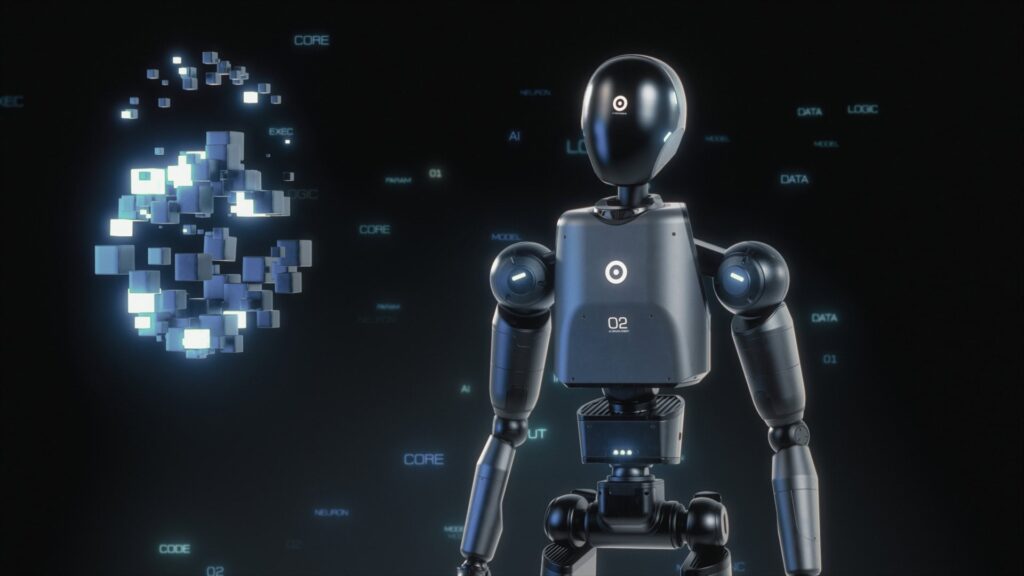
Physical AI connects artificial intelligence with machines, vehicles, and infrastructure. For autonomous systems to act safely, industry needs functional safety together with a digital trust infrastructure that makes identities and authorizations verifiable.
Artificial intelligence is usually viewed as a new form of software. That view falls short. AI is leaving the purely digital sphere and becoming Physical AI. It recognizes patterns in data, generates text or images, improves planning and maintenance, and increasingly intervenes in physical processes. This becomes especially clear wherever decisions have immediate consequences.
A few examples: Autonomous vehicles perceive traffic and act directly on steering, braking, and propulsion. Delivery drones plan flight routes, avoid obstacles, and move through shared airspace. In smart factories, AI systems coordinate robots, machines, and material flows. Humanoid robots move through buildings, warehouses, or production environments that were designed for people. In cities and energy grids, AI can manage traffic flows, building technology, generation, storage, and consumption.
From Model to Acting System
A digital decision thus turns into a physical action. With that shift, the requirements change as well. An error can stop a machine, steer a vehicle the wrong way, move a robotic arm, or throw a grid out of balance. Physical AI is therefore always also a question of functional safety, compliance, and liability.
For German industry, this development is particularly important. The global AI competition is often described in terms of language models, data centers, and platforms. But Germany’s strength does not lie in the large platform models of the internet economy. It lies in mechanical engineering, automation, vehicle technology, chemicals, pharmaceuticals, energy, logistics, and in many specialized industrial processes.
That is precisely where Physical AI takes effect. A different lever therefore makes more sense for Germany: AI must be integrated safely into products, plants, and value chains. Strength then lies not in the model alone, but in the combination of engineering expertise, operational data, product certification, industrial standards, and safe operation. This is exactly what creates a competitive advantage for the location.
Physical AI and Trust: Safety, Conformity, and Digital Identity Must Work Together
With Physical AI, European regulation becomes the operating framework. The AI Act classifies AI systems according to the risk of their use. Not every system is automatically a high risk system. Many applications, however, can fall under that category if AI is used as a safety component of a product or is part of a product that must be assessed under European product law. Requirements then apply for risk management, technical documentation, human oversight, accuracy, robustness, and cybersecurity.
For machines, robots, and industrial plants, the EU Machinery Regulation comes into play as well. It governs the safety of the physical machine and requires that it be designed safely and placed on the market with a declaration of conformity and CE marking. The regulation explicitly takes learning systems into account when they perform safety functions. An AI that controls movements, grippers, brakes, or protective functions is therefore part of a safety relevant product.
But this only describes one side. eIDAS 2.0 and the planned European Business Wallet address another, equally important question: Who is acting, who is authorized, and are digital records about machines and AI authentic and legally reliable? The interplay of these three areas is decisive. It enables verifiable identities, digital authorizations, electronic seals, timestamps, and proofs along supply chains, operators, manufacturers, and technical systems.
Digital Identities for Machines and Agents
In the age of generative AI, this trust layer becomes even more important. Documents, images, inspection reports, certificates, or technical records can be created or altered in deceptively realistic ways within seconds. What becomes decisive is whether a record can be verified cryptographically and assigned to an authorized organization.
In such an architecture, it is not only a company that holds a digital identity. Machines, AI agents, and services can also become uniquely identifiable, and their origin can be verified. This identity does not stand alone. It is linked to an organization that produces, validates, operates, or delegates a task to the system.
The agent acts with this mandate within a framework of legal accountability. When an autonomous system places an order, releases a maintenance task, transmits a dataset, or interacts with another machine, it is clear who stands behind it and what authorization exists. That is the foundation for safety, liability, billing, and auditability in industrial networks.
A look at the German energy sector shows that such trust mechanisms are not theoretical. The Smart Meter PKI is based on eIDAS 1.0. It identifies technical devices and secures the data exchange between energy companies. Physical AI needs a comparable trust logic, but broader and more dynamic. Because here it is not only metering systems that act. Autonomous vehicles, robots, machines, drones, energy systems, and software agents all act in shared processes.
Germany’s Opportunity in Industrial AI
The next productivity leap will arise when AI reliably controls physical systems and when companies can trust the actions that result. Physical AI is therefore a topic of location strategy for which Germany has strong foundations. The country has powerful industrial operators, experienced mechanical engineers, dense supply chains, regulated infrastructure, and high standards for quality and safety.
These factors are often seen as slow or difficult. With Physical AI, however, they can become an advantage. Autonomous systems will only succeed where they can be operated safely, attributed clearly, and verified legally. With a trust infrastructure in place, Physical AI can become a scalable part of industrial value creation.