
 Thought Leadership
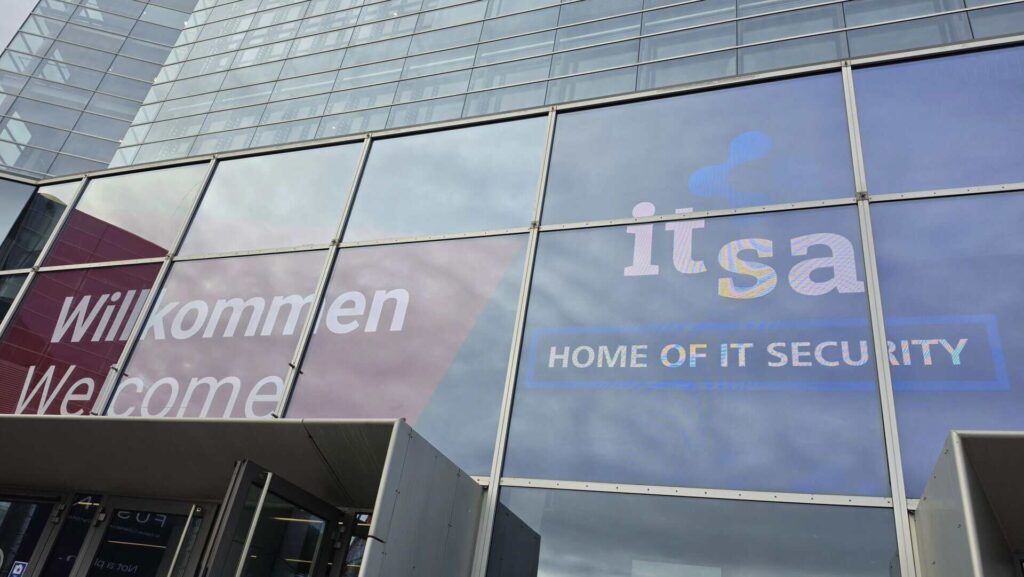
More visitors, more exhibitors, more AI: The it-sa trade show in Nuremberg (Germany) is growing rapidly. AI security dominated the exhibition floor, while digital sovereignty, NIS2 and post-quantum cryptography also featured prominently. A look back at the key topics and trends.
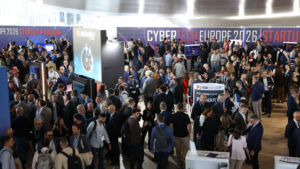
The it-sa 2026 welcomed more than 1,000 exhibitors for the first time, with a total of 1,005, and attracted more than 33,000 trade visitors from over 70 countries. According to the organizers, that represents an increase of around 20 percent compared with the previous year.
“This year’s it-sa has impressively demonstrated the momentum currently driving the cybersecurity market,” says Thimo Holst, Head of Brand Strategy at it-sa. The event’s growth and the fact that it has surpassed 1,000 exhibitors for the first time are “a clear sign of the event’s relevance.” Cybersecurity has become a strategic issue for business, government and society alike. The atmosphere on the exhibition floor certainly reflected that growth in numbers: The halls were packed, particularly during the first two days, and long lines formed at the presentation forums.
Visitors received particularly positive feedback from exhibitors. Almost every company that spoke with it-daily.net reported highly engaged attendees arriving at their booths with specific problems and challenges. The audience was also diverse, ranging from IT administrators, CISOs and CEOs to partners and students. The organizers shared that assessment. “What was particularly encouraging was the quality of the conversations at the booths and in the forums,” Holst says.
AI Everywhere: Both a Security Tool and an Attack Surface
One topic was impossible to miss: AI security featured at virtually every booth. The term covers two distinct developments. First, vendors are integrating AI into their products, for example to detect anomalies or automate processes in security operations centers. At the same time, the need to secure AI systems themselves is growing. Key risks include prompt injection, data leakage and autonomous agents operating with extensive privileges.
One thing became clear at it-sa: The age of AI agents has arrived.
“Many companies have taken some hard knocks during their AI transformation,” says Thomas Müller-Martin, Field Strategist at identity specialist Omada. “Security is what makes AI transformation possible in the first place.” SAP is already talking about the Autonomous Enterprise, a vision in which companies automate as much as possible. Müller-Martin uses a vivid analogy: Companies are driving a sports car powered by AI but still relying on yesterday’s brakes. “Identity security is what makes that speed possible in the first place.”
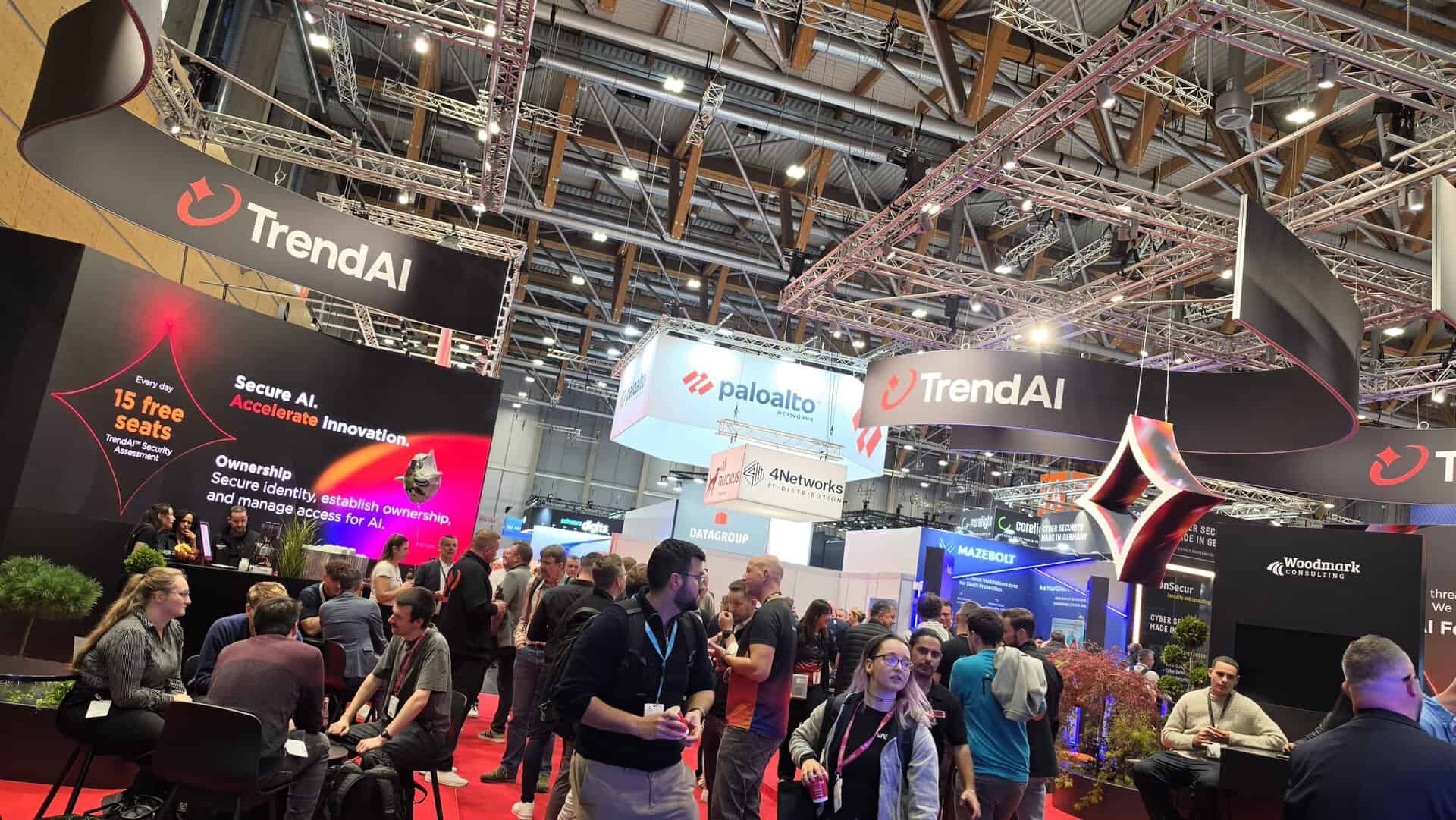
What stood out was how naturally AI has become part of the conversation. Hardly any vendor could do without an AI reference in its booth messaging. Sophos, for example, unveiled a new firewall series at the event. Yet even when AI can detect threats within an average of 89 seconds, customers still want to understand exactly what happened, says Sven Jansen, VP Sales Central Europe at Sophos.
Waiting for M-Day
Christoph Schuhwerk, CISO in Residence at Zscaler, is looking further ahead. He expects “M-Day” to arrive as early as November. The term refers to the day when freely available open-weight models reach capabilities comparable to Mythos, Anthropic’s AI model, which is currently accessible only to selected organizations. At that point, attackers will have access to similar capabilities.
Schuhwerk illustrates the potential with Project Glasswing, where Mythos is currently being deployed. Even in the company’s own code, which he describes as its most thoroughly tested codebase, the model still uncovered vulnerabilities. Looking ahead, Schuhwerk expects 50 AI agents for every human user, all of which will need to be secured.
Dennis Monner, CEO of Open Systems, and CTO Markus Ehrenmann strike a similarly urgent but prepared tone. “AI-driven attacks are increasing dramatically. That means we need to take action within the network. Essentially, we have to assume that someone is already inside.” Open Systems is therefore pursuing a two-layer defense strategy and unveiled the second layer at it-sa.
The first layer, Argus, follows a collective defense approach. It blocks threats in real time at the network edge, using threat signals shared among customers without exposing their data.
The new second layer, Apate, relies on active deception. Generatively created decoys lure attackers into honeypots, which Open Systems calls “decoys.” Their methods are analyzed, and the resulting intelligence is used to block them across the network.
Conversations at the show repeatedly highlighted just how much the pace of cyber threats has accelerated. “The cat-and-mouse game isn’t going away. But the speed is increasing dramatically,” says Enrico Bartz, Senior Solutions Architect – Public Sector at Red Hat. Organizations need to be prepared for incidents such as the critical PHP vulnerabilities that attracted worldwide attention in the weeks leading up to the event.
Digital Sovereignty, NIS2 and the Quantum Computing Challenge
Alongside AI, digital sovereignty was the second major theme. Many companies and government agencies want to know where their data is stored, who can access it and how dependent they are on individual providers, most of them based outside Europe. European vendors made visible use of this as a selling point. “We continue to see companies taking a close interest in digital sovereignty and looking for ways to make dependencies transparent and manage them,” says IT services provider ACP.
NIS2 came up more casually in many conversations, but remained firmly on the agenda. For numerous organizations, the directive means new obligations around risk management and incident reporting, creating concrete requirements that vendors are keen to address. Post-quantum cryptography was another recurring topic. While no quantum computer currently exists that can break the encryption methods widely used today, concerns about “harvest now, decrypt later” attacks are pushing the migration to quantum-resistant cryptography onto corporate agendas.
The Audience Takes on the Role of an Incident Response Team
On the final day, Prof. Dr. Marco Gercke used his keynote, “Cyber Incident Simulation,” to walk the audience through a simulated attack on a fictional mid-sized company. Attendees took on the role of the management board and voted by a show of hands: How serious is the incident? Should the company pay the ransom?
The responses sometimes differed significantly. According to Gercke, that is exactly what happens in real-world incidents: Consensus does not emerge immediately. Decision-making processes and responsibilities therefore need to be established before an incident occurs. The event also featured six open forums and Congress@it-sa, with presentations covering cloud security, digital resilience and the protection of critical infrastructure.
IT Security Awards 2026: Seven Awards Mark 20 Years
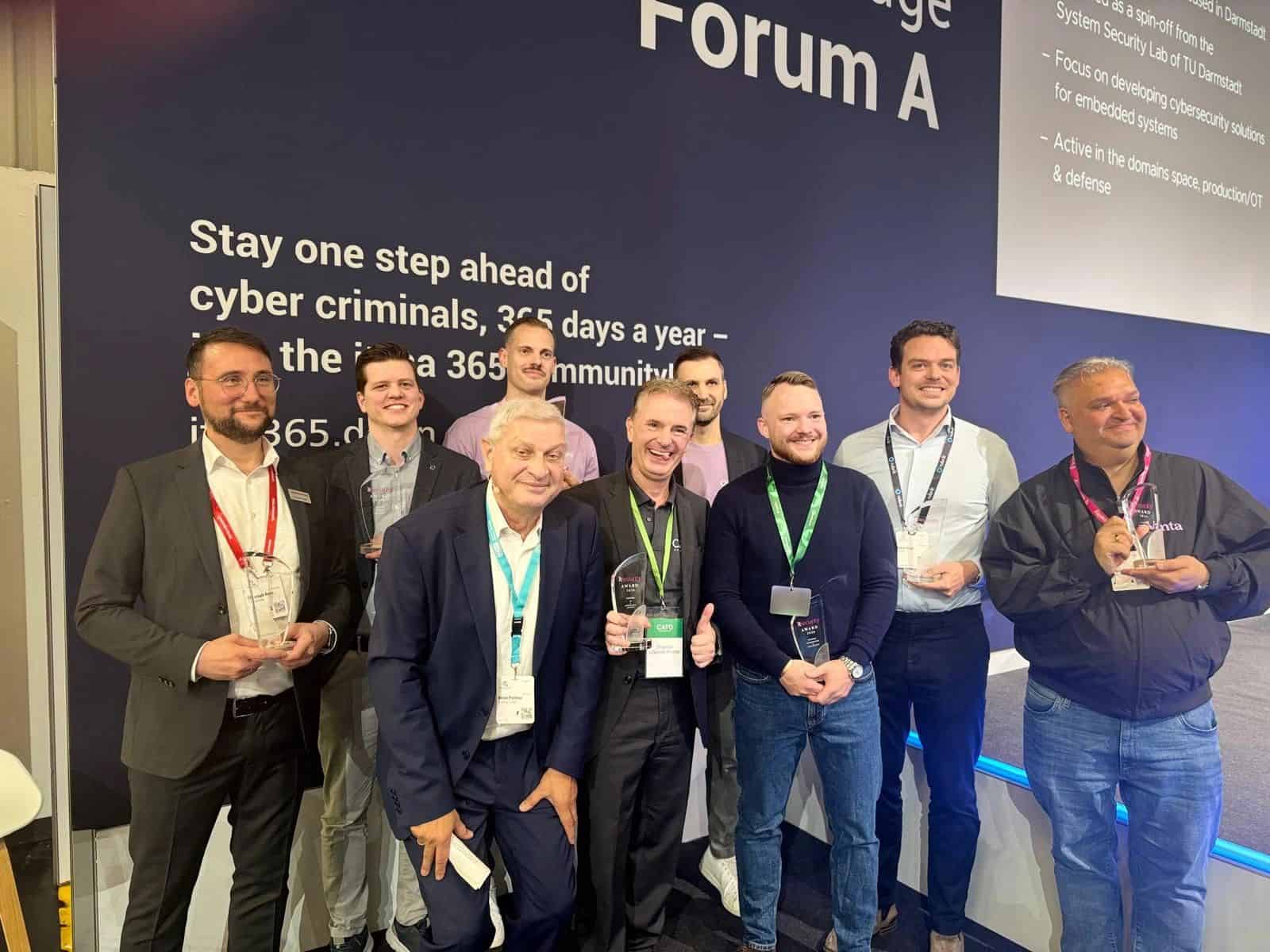
On the first day of the trade show, IT Verlag presented the IT Security Awards 2026 as part of it-sa. The awards have been running for 20 years and were presented in seven newly defined categories for the first time this year. The winners also reflected the trade show’s dominant trends. Several are focusing on AI and automation, with Cato Networks leading the way in the new Autonomous Security category.
Read more about the winners of the IT Security Awards 2026 here.
2027: One More Hall and a Dedicated Conference
The trade show is set to grow further. With the existing exhibition space fully booked, Hall 10 will be added in 2027, bringing the it-sa EXPO to a total of six halls. The organizers also introduced the new it-sa CONFERENCE as part of the Cyber Thought Leaders Dialogue. Participants included Nuremberg Mayor Marcus König, Bavaria’s State Secretary for the Interior Sandro Kirchner, Barbara Kluge from Germany’s Federal Ministry of the Interior (BMI), and Heli Tiirmaa-Klaar from the IT Coalition of the Ukraine Defence Contact Group.
Going forward, the it-sa brand will comprise three elements: it-sa EXPO, it-sa CONFERENCE and the year-round platform it-sa 365. However, growth has also brought some criticism. Several exhibitors complained that parts of the show had become difficult to navigate and said they missed having an app to help them find their way around. With a sixth hall being added in 2027, that challenge is unlikely to become any smaller.
Conclusion
The it-sa 2026 was busy, international and clearly focused in terms of content. AI security was the show’s defining buzzword. But some of the more interesting conversations went beyond AI, addressing vendor dependencies, NIS2 implementation and the question of when organizations need to make their cryptography quantum-resistant. For exhibitors, one thing mattered most: Visitors came to Nuremberg with specific questions and real challenges. For a trade show, that’s the strongest endorsement there is.