
 Thought Leadership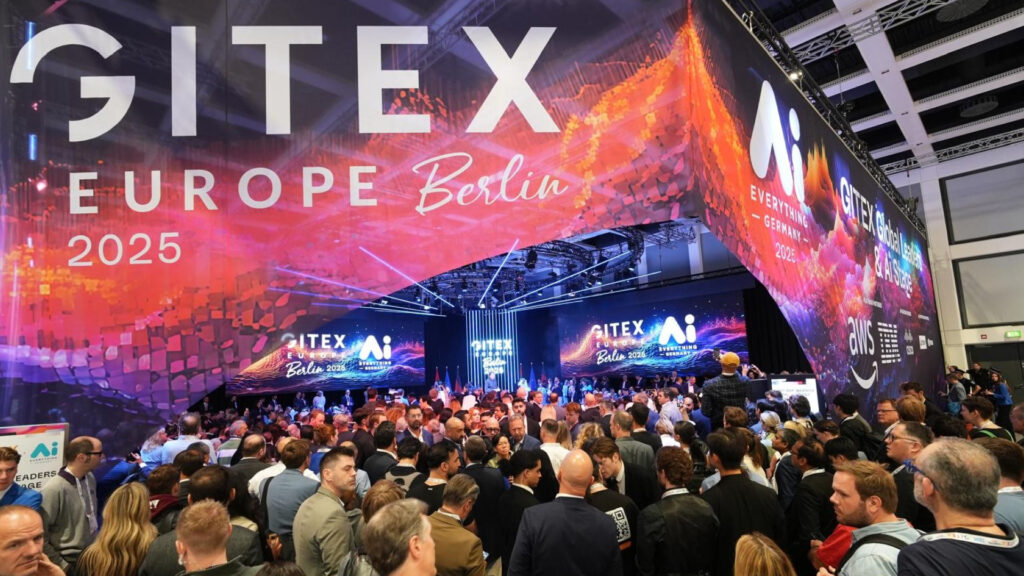
At the second edition of GITEX AI Europe, more than 800 exhibitors and 500 investors will gather in July. At the heart of the event lies a fundamental question: who actually owns Europe’s digital infrastructure?
From June 30 to July 1, 2026, GITEX AI Europe will open its doors for the second time at the Messe Berlin exhibition grounds. The event, organised by global trade show operator inD, positions itself as a cross-industry platform for technology and the digital economy in Europe. Around 800 companies and start-ups, 500 investors, and 120 speakers from more than 100 countries are expected to attend.
Sovereignty as the Central Question
The guiding theme of this year’s edition is “Digital Sovereignty,” and there is hardly a topic more pressing given the current geopolitical climate. The backdrop is stark: by 2028, forecasts suggest that around 91 percent of all enterprise workloads will have migrated to the cloud. The problem is well known but rarely addressed so directly. A data centre located in Frankfurt does not automatically make a cloud service sovereign if the operator is subject to American or Chinese law.
True digital sovereignty does not arise from server location alone, but through ownership, open standards, and technological control over the entire cloud and AI stack. This is a position that plays into the hands of European hyperscaler alternatives such as IONOS or OVHcloud, and accordingly the topic is unlikely to be debated at the fair without the self-interest of those involved playing a role.
High-Profile Speakers, Familiar Faces
The list of speakers reads like a who’s who of politics, finance, and the tech industry. Federal Digital Minister Dr. Karsten Wildberger is expected to attend, as is Stefan B. Wintels, CEO of KfW Bankengruppe. From the start-up and scale-up space, speakers include Dr. Jarek Kutylowski, founder and CEO of DeepL, as well as Ryan Foutty from the AI search engine Perplexity. Enpal CPO Benjamin Merle also features on the speaker list.
The event is supported by the Berlin Senate Department for Economics, Energy and Public Enterprises as well as Berlin Partner für Wirtschaft und Technologie, underscoring Berlin’s ambition to further cement its reputation as a European tech hub.
North Star Europe: A Focus on Start-ups
A dedicated area called North Star Europe is designed to specifically address founders, scale-ups, and small and medium-sized enterprises. Separate zones for unicorns and high-growth companies round out the offering. The thematic range spans artificial intelligence and quantum computing, cloud infrastructure and cybersecurity, through to sustainability technologies.
(red)