

 Thought Leadership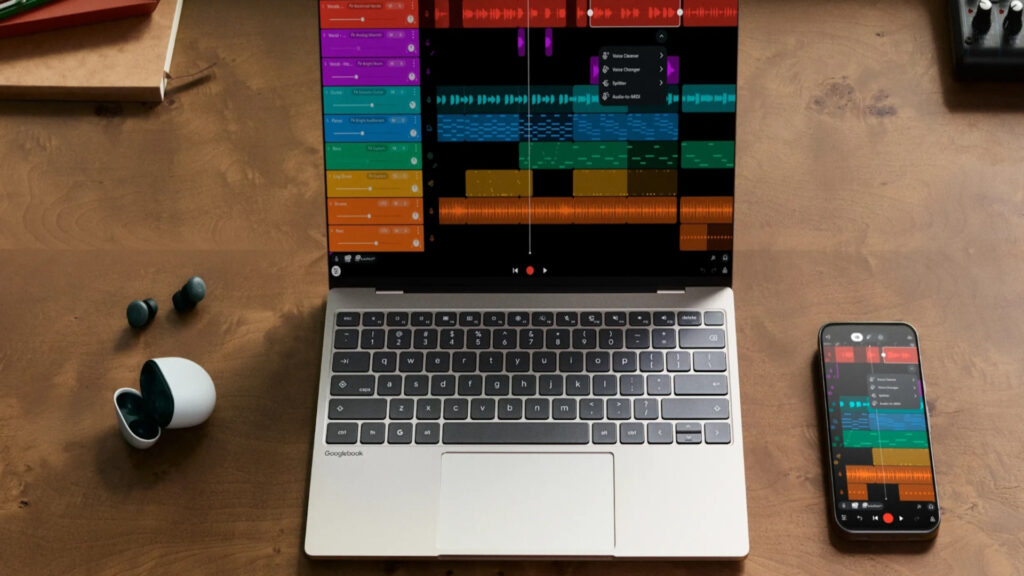
Google has launched pre-orders for its new Googlebook laptops starting at 899 US dollars, built entirely around the Gemini AI assistant.
Google opened pre-orders for its new Googlebook laptop series on Monday. The devices are set to hit stores on October 4 in the US, and a day later in Canada, the UK, Ireland, France, Germany, and Australia.
Starting at 899 US Dollars with Two Processor Options
Entry-level prices start at 899 US dollars. According to a blog post from Google, buyers can choose between Intel Core Ultra Series 3 or Snapdragon X Elite processors at launch, each combined with an NPU for AI capabilities. Google specifies battery life at up to 14 hours. Google had already presented the new device category in May 2026 at its developer event, “The Android Show,” as the successor to the Chromebook lineup, of which around 50 million devices are in use at schools worldwide according to the company. Alexander Kuscher, responsible for laptops and tablets at Google, described the approach:
“As we move from operating systems to intelligence systems, we had the opportunity to rethink what a laptop should be.”
— Alexander Kuscher, Responsible for Laptops and Tablets at Google
The Cursor as a Gateway to Gemini
A central element of the Googlebooks is an AI-powered cursor called Magic Pointer, through which Gemini can be integrated directly into familiar workflows. Users can use it to highlight content on a webpage and have Gemini process it, let Gemini inspect a suspicious-looking email, or visualize multiple selected images together. With the “Create My Widget” feature, users can also build their own desktop widgets simply via natural language prompts, for instance by integrating services like Gmail or Calendar. Another feature named “Rambler” converts unstructured, spoken thoughts into readable text.

Deep Integration with Android Smartphones
Through the “Cast My Apps” feature, Android apps can be opened on the laptop directly from the smartphone without needing to be installed separately. Via “Continue On,” icons of apps currently used on the smartphone appear in the laptop’s taskbar and can be resumed with a single click. The “Quick Access” feature also allows direct access to files stored on the smartphone right through the laptop’s Files app. For iPhone users, only a limited app called “Link to iOS” is available to sync messages. According to Google, these features require at least Android 17 on the connected smartphone. For gaming, Google also integrates Nvidia’s streaming service GeForce Now, with the first year included free of charge when purchasing a Googlebook.
Five Manufacturers, One Shared Design Element
The initial devices are manufactured by Acer, Asus, Dell, HP, and Lenovo, using materials such as aluminum, magnesium alloy, and carbon fiber. A shared design feature across all models is the so-called Glowbar, a light strip on the chassis that animates during boot-up, can indicate battery status, and supports additional light patterns. Google is also opening this feature to developers, who can design their own interactive animations for it.
Observers also view the Googlebook as an attempt to gradually transition a portion of the education market, which previously relied heavily on traditional Chromebooks, toward Google’s Gemini AI. Back in May, Google announced that existing Chromebooks would continue to be supported, but many of them would be able to transition to a Googlebook experience in the future.
Initial Impressions
A reviewer from The Verge, who already had hands-on access to the first devices, describes the hardware as polished and the operating system as familiar to previous Chromebook users. The integration between Android smartphone and laptop was particularly highlighted, making both devices feel more like a single system. Among the tested models, the report singled out the lightweight Asus device, the well-equipped Lenovo model with matching mouse, the versatile and comparatively affordable Acer device, the HP with a good screen, and the Dell model reminiscent of an XPS 13.
(Editorial Team)