
 Thought Leadership

The internet exchange operator DE-CIX identifies five technology trends for 2027, ranging from distributed AI inference and data routing to data centers powered by living cells.
Frankfurt-based internet exchange operator DE-CIX has unveiled its technology predictions for 2027. The forecast focuses on how autonomous AI systems will affect network capacity, resilience, and digital sovereignty.
Inference Becomes the Dominant AI Workload
According to DE-CIX, AI workloads will increasingly be distributed across cloud platforms, regional data centers, enterprise environments, and edge locations closer to users and data sources in 2027. Inference, the process of running trained models, is expected to overtake model training as the primary AI workload. DE-CIX believes performance will depend not only on computing power but also on network connectivity. Low latency, efficient routing, redundancy, and private interconnections will all become increasingly important.
Identity and Permissions for AI Agents
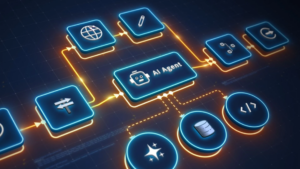
As companies deploy AI agents across cloud platforms, applications, and organizational boundaries, identities, permissions, policies, and context will need to travel with these agents at all times, much like a passport, according to DE-CIX. A form of digital “customs clearance” will determine which systems an agent can access, where it is allowed to operate, and which routes it can use to transfer data.
DE-CIX also predicts the end of the one-size-fits-all network. Fiber optics, Wi-Fi 7, 5G-Advanced, low Earth orbit satellite networks, SD-WAN, SASE, and private cloud connections will increasingly be combined to meet the specific requirements of each use case, whether that means low latency, high bandwidth, or maximum resilience.
Knowing Where Data Travels
According to DE-CIX, an approach the company calls “Know Your Routes” will become increasingly important for digital sovereignty. Companies will need to look beyond where their data is stored and examine which networks and legal jurisdictions the data passes through on its way to its destination. This will require deeper visibility into data paths and greater control over the choice of network interconnection partners.
“To enable innovation to thrive, companies need greater transparency and control over where their data flows and the routes it takes.”
Ivo Ivanov, CEO of DE-CIX
Biological Computing Moves Into Focus
DE-CIX identifies biological computing as its fifth trend. In August 2026, NUS Medicine, DayOne, and Cortical Labs unveiled a prototype biological data center in Singapore. Its 20 computing units use living human neurons derived from stem cells. Such systems could operate using only a fraction of the energy required by conventional computers. DE-CIX does not expect biological computing systems to replace conventional servers in 2027. However, the company anticipates growing interest in applications such as pharmaceutical research and neuroscience.
Gartner also included biological computers in its technology trends for 2027, referring to the concept as “Wetware as a Service.” DE-CIX operates internet exchanges at more than 65 locations worldwide. Its Frankfurt exchange connects nearly 1,100 networks and handled almost 48 exabytes of data traffic in 2025.
(Editorial Team/DE-CIX)