
 Thought Leadership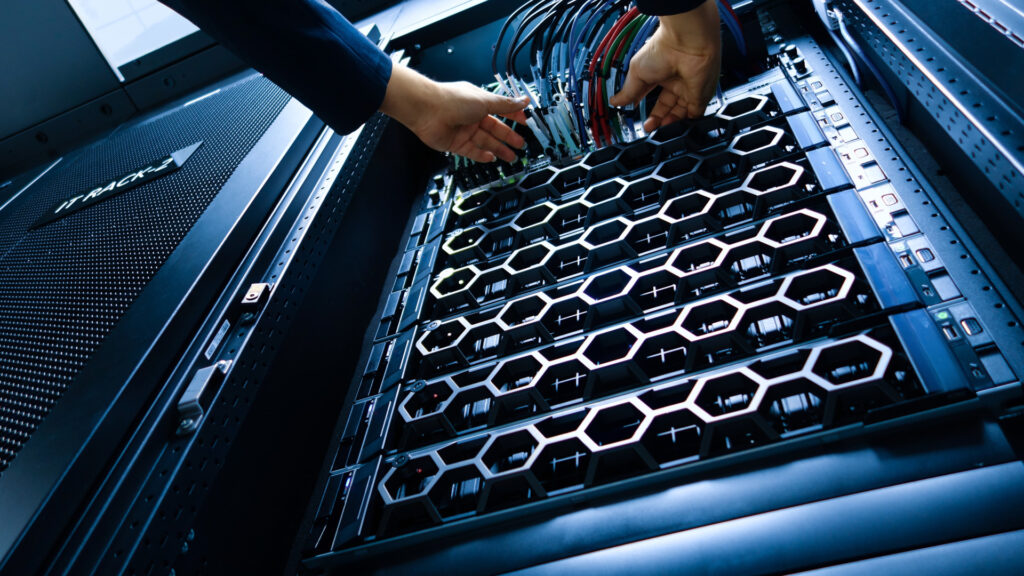
Classic servers and network components are becoming scarcer and more expensive. Transition maintenance could now emerge as a game-changer.
Six to twelve months of lead time for a standard server: what seemed unthinkable just a few years ago is the reality for many IT departments in 2026. The boom around AI infrastructure has shifted the priorities of semiconductor manufacturers. Production capacity is flowing into GPU clusters and specialized AI accelerators, while classic enterprise components are pushed to the back of the queue. The result is not only long delivery times, but also price increases in the double-digit percentage range and a CAPEX structure that is barely plannable anymore.
For companies that have aligned their IT operations to classic three-to-five-year refresh cycles, this is more than a logistical problem. Those waiting on new hardware and not receiving it risk unplanned outages in business-critical infrastructure, from ERP systems to production lines.
What transition maintenance actually means
This is precisely where the concept of transition maintenance comes in, an approach championed by IT service provider K&P Computer. The term describes a structured model in which existing hardware is deliberately operated beyond the manufacturer’s defined end-of-support (EoS/EoL) date. The technical foundation consists of manufacturer-independent service contracts, known as third-party maintenance, combined with defined SLAs, regular health checks, and proactive spare parts provisioning.
The key point K&P Computer emphasizes is that this is “not a reactive approach of simply letting things run,” but rather “an active operating model with clear risk management.” In other words, transition maintenance is not about running old hardware until it fails. It is about actively managing and securing continued operation.
Compliance and failure risk as counterarguments
When people first hear about transition maintenance, two objections often come to mind: compliance and failure risk. According to the IT service provider, both can be addressed.
Compliance, the argument goes, is not a question of device age but of process. What matters is patch management, access controls, and auditability, not the manufacturing year of a server. As long as these requirements are met and properly documented, end-of-life hardware can be operated in a compliant manner.
On the question of failure risk, the company argues similarly: longer operation does not automatically mean higher risk, provided there is a well-thought-out spare parts strategy and preventive diagnostics in place. Risk becomes calculable, not eliminated, but manageable.
Financial flexibility instead of investment pressure
Beyond the technical arguments, cost plays a central role in the case for transition maintenance. The model is designed to convert unpredictable capital expenditures into foreseeable operating costs, thereby reducing CAPEX pressure. Companies that are not forced to procure new hardware under time pressure can wait for more favorable market conditions or deploy budget more strategically.
K&P Computer describes the goal as “deliberately creating a strategic window of opportunity” that companies can use to observe markets, resolve architecture questions, or gradually migrate to cloud and hybrid models. In this understanding, transition maintenance is not an endpoint but a phase within a longer-term IT strategy.
Bridge solution or standalone model?
Whether transition maintenance holds up as an independent strategic concept or is ultimately third-party maintenance under a new name remains an open question. The underlying challenge, however, is very real: structural supply bottlenecks for enterprise hardware are likely to persist for several more years. Companies that rely exclusively on classic refresh cycles are exposing themselves to growing operational risk.
Transition maintenance, the argument concludes, is not a stopgap in this environment. It is a professional operating model for volatile market conditions.