
 Thought Leadership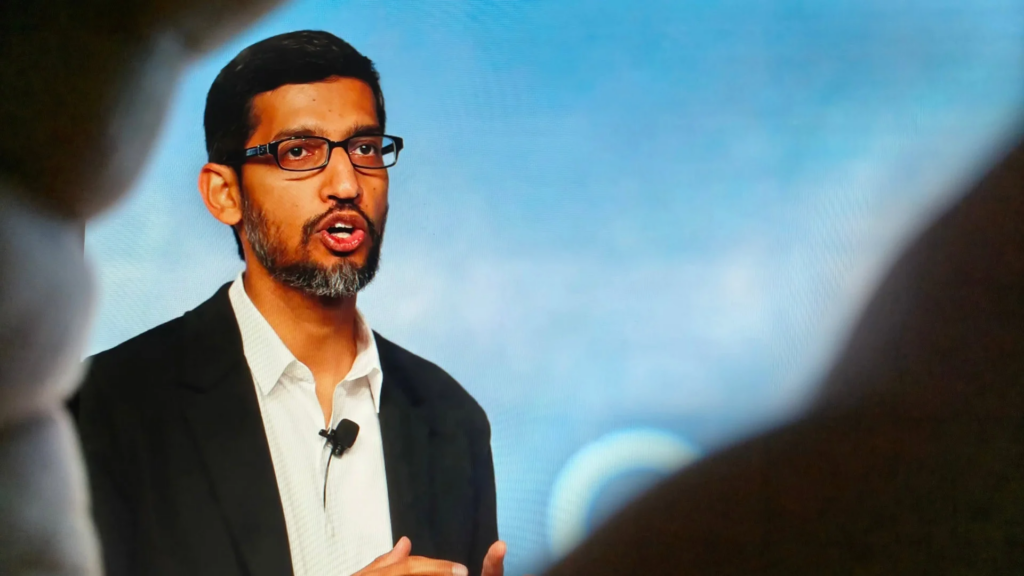
With Project Suncatcher, Google plans to put satellites equipped with its own AI chips into orbit and use solar power directly for AI computing.
Google is exploring the idea of operating AI data centers directly in space with Project Suncatcher, a research initiative from the company’s “moonshot” division X. The goal is to build a constellation of solar-powered satellites equipped with Google’s own Tensor Processing Units (TPUs).
First Test Satellites Planned for 2027
For an initial real-world test, Google has partnered with satellite company Planet Labs. Two prototype satellites are scheduled to launch by early 2027. They will be based on Planet’s new Owl satellite platform and feature expanded solar panels. Google plans to use the satellites to test how TPU hardware and its own AI models perform in space. The company also wants to validate the use of optical links between satellites for distributed machine learning workloads.
Why Solar Power Works Better in Space
According to Google, sunlight provides significantly more energy outside Earth’s atmosphere than it does on the ground. In the right orbit, solar panels could be up to eight times more productive than terrestrial installations. A so-called sun-synchronous orbit could also provide nearly continuous exposure to sunlight, significantly reducing the need for batteries. At the same time, Google aims to address two major challenges facing today’s power-hungry data centers on Earth: enormous electricity consumption and high water usage for cooling. Excess heat can be dissipated more easily in the vacuum of space.
Lasers Instead of Cables
The planned satellites would fly in tight formations, just 100 to 200 meters apart and within a radius of roughly one kilometer. They would communicate using so-called free-space optical links, essentially laser-based connections. By combining multiple wavelengths with spatial multiplexing, the system could theoretically achieve data rates of several dozen terabits per second. In a laboratory test on Earth, Google has already achieved 1.6 terabits per second between two transmitting and receiving units.
Chip Radiation Resistance Put to the Test
Initial tests involving Google’s Trillium-generation TPUs and an AMD processor were conducted in a particle accelerator designed to simulate the radiation exposure of low Earth orbit. According to Google, the hardware showed no detectable damage. However, the company says significant technical challenges remain, particularly when it comes to thermal management and system reliability in orbit. Google CEO Sundar Pichai said:
“Like any moonshot, it’s going to require us to solve a lot of complex engineering challenges. Early research shows our Trillium-generation TPUs (our tensor processing units, purpose-built for AI) survived without damage when tested in a particle accelerator to simulate low-earth orbit levels of radiation. However, significant challenges still remain like thermal management and on-orbit system reliability.
More testing and breakthroughs will be needed as we count down to launch two prototype satellites with @planet by early 2027, our next milestone of many. Excited for us to be a part of all the innovation happening in (this) space!”
Sundar Pichai, Google CEO
Economic Viability Not Expected Until the Mid-2030s
Based on its own calculations, Google expects satellite-based data centers to become economically viable only around the middle of the 2030s. A key requirement would be reducing the cost of transporting payloads into space from around $1,500 USD per kilogram today to approximately $200 USD. According to current estimates, the individual components of these miniature space-based data centers could operate for up to six years before radiation increasingly affects their internal electronics.
Google is not alone in pursuing the concept. Former Google CEO Eric Schmidt, who now leads space company Relativity Space, as well as Jeff Bezos, Elon Musk, IBM subsidiary Red Hat, Chinese providers and startups such as Starcloud are also developing their own concepts for data centers in orbit.
(Editorial Team)