
 Thought Leadership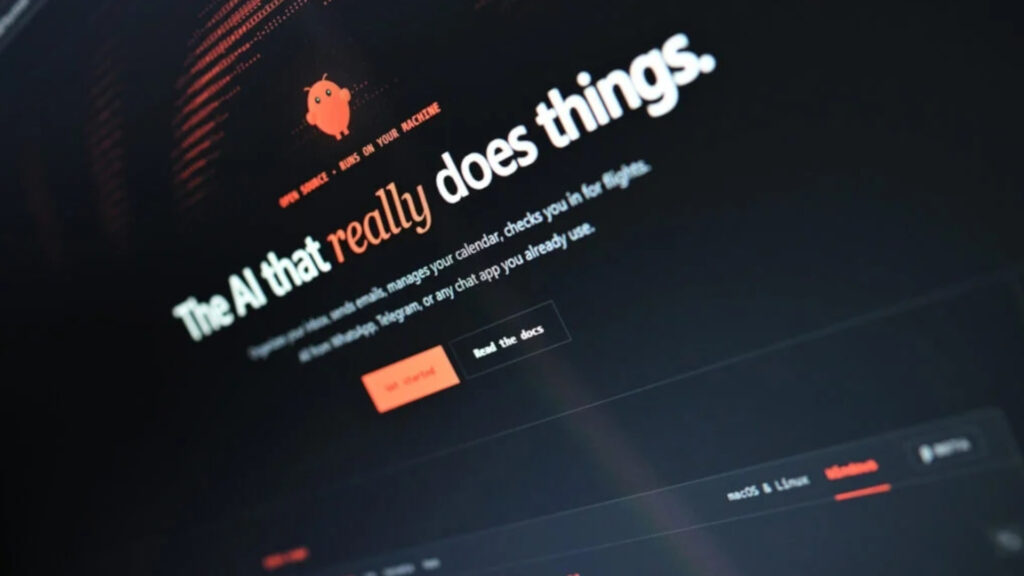
After almost two months without a new version, the team behind OpenClaw has released an update that changes practically every part of the software.
With version 2.0, the open-source project OpenClaw has released what it claims to be the most extensive update in its history. A total of 933 individuals contributed, 569 of them for the first time, spread across more than 16,000 pull requests. According to the project team, almost all areas are affected: installation, messaging, memory management (“Memory”), skills, model connectivity, automation, browser and native apps, plugins, and security features.
Originally, the update was merely intended to simplify setup and redesign the browser interface. In the course of the work, however, the team decided to expand the associated cleanup work to the entire project. That became OpenClaw 2.0.
Unusually long development pause
Prior to the current update, the project had published 106 releases in 230 days, most of them spaced one to two days apart. The nearly seven-week pause leading up to version 2.0 thus deviated significantly from the previous rhythm. According to the team, this was not due to a development standstill, but the opposite: due to a growing team, both the pace of work and the volume of contributions overwhelmed the previous technical foundation and release process. Both were therefore revamped in parallel.
Since the release contains an estimated half of all pull requests ever integrated into OpenClaw, the team consciously took more time in order not to jeopardize either new installations or existing setups.
Easier onboarding, redesigned browser app
During initial setup, OpenClaw 2.0 will in the future rely on already existing resources, such as existing subscriptions with ChatGPT or Claude, existing API keys, or locally installed models. According to the project team, part of the previous configuration was removed, and another part was decoupled from the initial setup process. This is intended to allow users to reach a first working conversation faster and make further settings later in dialogue with the assistant.
The browser app was also rebuilt from scratch, as it is the first point of contact with OpenClaw for most users. It now opens directly into an ongoing conversation and is designed to serve both for further setup as well as for active tasks and their live tracking.
From simple workflows to shared cloud sessions
The project team describes simple automations limited to a single source as a typical entry point, such as monitoring an email inbox for messages from one’s children’s school followed by a notification via Telegram. Such workflows could then be expanded, for instance by having the assistant independently search older emails for a suitable response following an incoming iMessage message and send it.
According to the team, a similar trend emerged in their own use of OpenClaw during the development of version 2.0: The desire to share or hand off tasks within the team without losing the previous context of the conversation led to the introduction of shared cloud sessions. This allows active sessions to be opened to additional team members or handed off completely along with context—a kind of multiplayer mode for the AI assistant.
Open source as a waiver of business models
The project team emphasizes that with OpenClaw, it is not pursuing a business model intended to lock users into a specific provider, model, or company. OpenClaw is open source and is developed and supported by the community. Project member Hannes Rudolph summarizes the team’s stance as follows: “Use it, build with us, and tell us if we messed up.”
The project provides the complete release notes for OpenClaw 2.0 on its website.
(Editorial Team)