
 Thought Leadership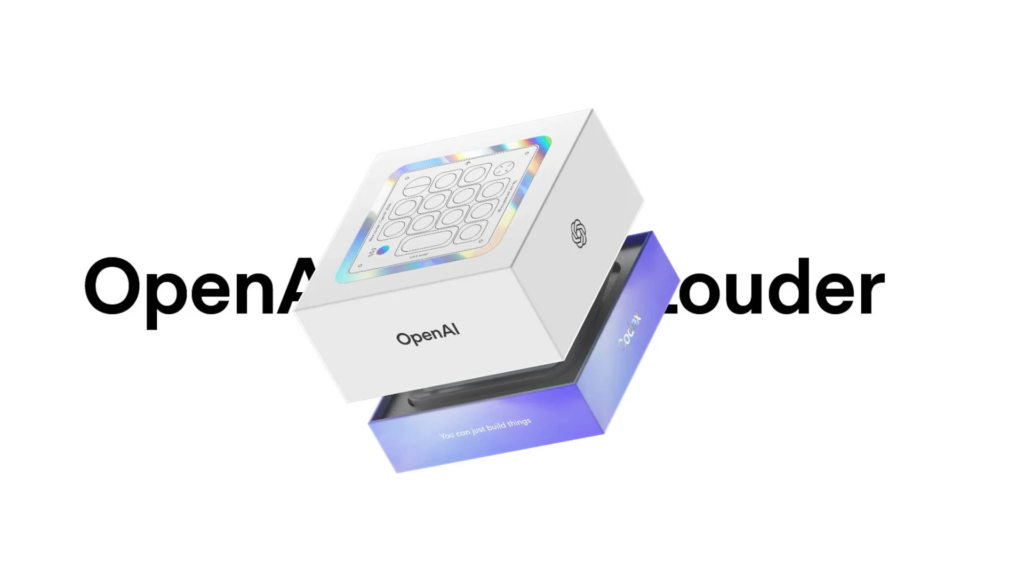
OpenAI is making its first move into the hardware market with the launch of a backlit keyboard designed specifically for its AI coding assistant, Codex. The new device, called Codex Micro, is priced at $230 USD.
Developed in collaboration with Work Louder, a manufacturer known for niche mechanical keyboards, the Codex Micro targets ChatGPT users who run multiple coding agents simultaneously.
The keyboard features illuminated Agent Keys that display the status of individual AI agents. Users can also assign frequently used Codex commands to customizable Command Keys. A built-in joystick provides quick access to recurring workflows, while a rotary dial lets users adjust an agent’s reasoning level, controlling how much compute and time it spends on a given task.
According to OpenAI, the Codex Micro is designed to serve as a central control interface for agentic workflows, complementing the existing ChatGPT desktop and smartphone experience. Configuration and customization are handled through the ChatGPT desktop application.
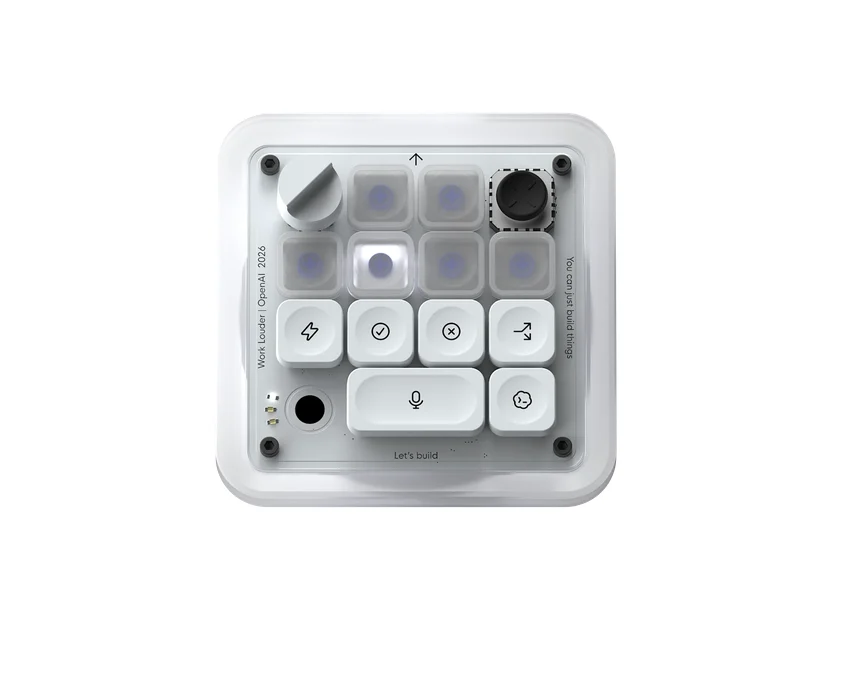
In an interview with TechCrunch, OpenAI described the Codex Micro as a limited collaboration project, suggesting that the keyboard is intended as a specialized accessory for a small group of power users rather than a mass-market product.
Codex Micro Specifications
| Feature | Specification |
| Connectivity | Bluetooth / USB-C |
| Compatibility | Mac / Windows |
| Lighting | RGB |
| Materials & Finish | CNC-machined PC and aluminum. Sandblasted anodized base. PBT and PC keycaps. Rubber joystick cap. POM/POK switches. |
| Controls | 13 mechanical switches, 1 touch sensor, 1 rotary encoder, 1 planar joystick |
| Keycap Set | 32 custom icon keycaps, 11 solid-color keycaps |
| Software | ChatGPT Codex, Work Louder Input |
| Included | Creator Micro, USB-C to USB-C cable, Codex icon keycap set (30 × 1U, 1 × 2U) |
Second Hardware Project Also in Development
A separate, unreleased OpenAI hardware project drew even greater attention a day earlier following a report by Bloomberg. According to the report, OpenAI is developing a screenless wearable device resembling a smart speaker that will integrate closely with ChatGPT and include mechanical components capable of moving independently.
Exactly how these features will come together in the final product remains unclear, as OpenAI has not provided additional details. Bloomberg reports that the device is still in development, meaning its design and capabilities could change before launch.
Apple Lawsuit Looms in the Background
Former Apple engineers are reportedly involved in developing the second hardware device. Last week, Apple filed a lawsuit against OpenAI, alleging that senior executives deliberately obtained confidential Apple information and used it during the development of a competing hardware product. OpenAI has denied the allegations.
(lb)